


A Sit Down with Eric Shapiro

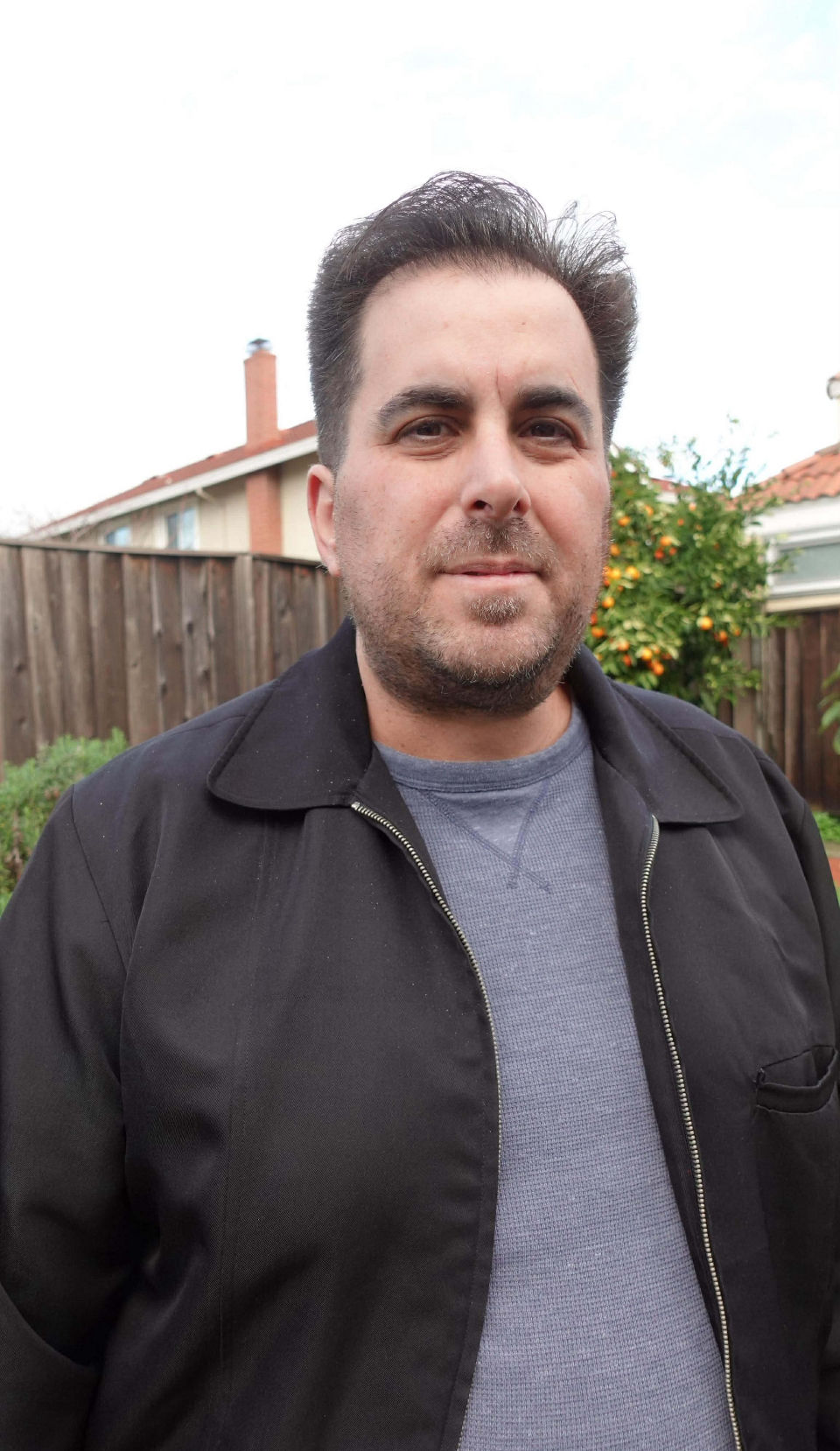
Eric Shapiro is a writer and filmmaker. He wrote Macho, the forthcoming Randy Savage biopic produced by Artists for Artists, Midas Entertainment, and Range Media Partners, and Behind the Facade, a feature screenplay developed by Rebel Six Films. His films have screened at Fantasia and Fantastic Fest and streamed on Netflix and Hulu. A California Journalism Award winner, he is editor and co-owner of The Milpitas Beat.
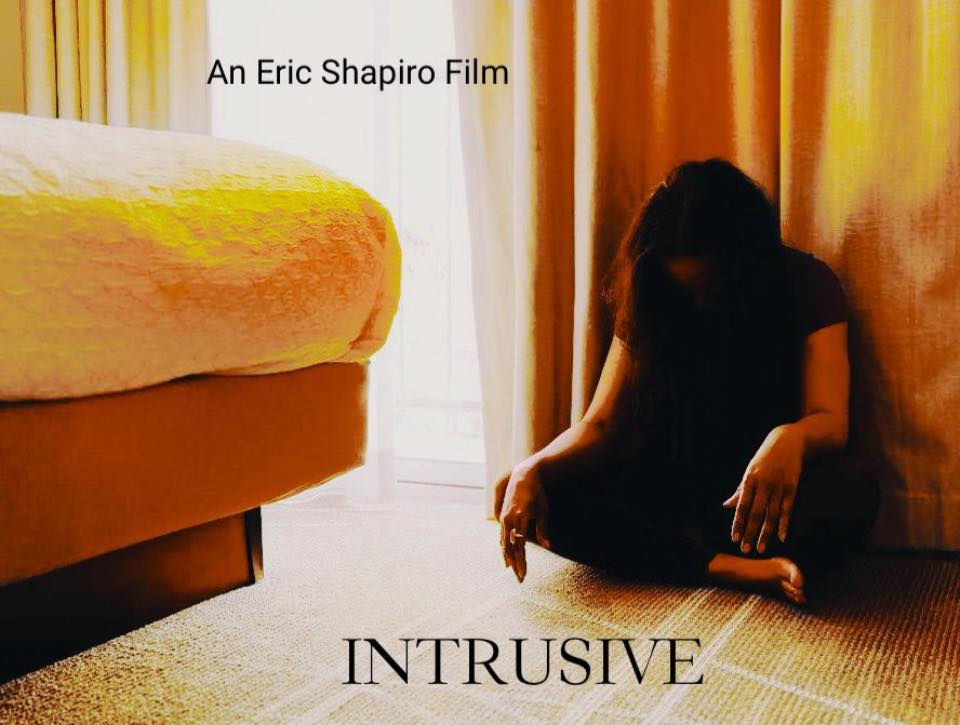
INTRUSIVE
Melissa: Let’s start with the cast and crew.
Phenomenal acting from the entire cast. What is impressive is that the movie isn’t about props, and the characters literally feed off one another.
As the film’s director, did you find it challenging to visit those scenes?
ERIC: Thank you! I love these actors. It’s actually easier for me to manage things with less props. My movie Living Things takes place at a dinner table, and the characters are done with their forks and knives about two minutes in. I’m generally steeped in the characters and dialogue and start from there. When I write for other producers, I build bigger worlds, but when I’m directing, I usually try to keep things pure and simple, and anchored in what the characters are feeling and thinking. So it is very dialogue-driven.
Melissa: Did the actors contribute to visualising certain scenes?
ERIC: Not in this film. Sometimes I’ve had actors who’ve come in with a lot of ideas for blocking, which influences where the camera ends up going, but the ensemble on Intrusive was more focused on the performance side than those visual choices.
Melissa: From the start of the script to the end of filming, how long was the process? And would you do anything differently?
ERIC: The producer and story creator James White, and I started in October, 2023, and saw the complete movie premiering at Philcon in November, 2024. But it was all done by September, 2024, so 11 months total. I wish it was a little longer and that the first half wasn’t so sedentary. The movie expands midway through to a whole different kind of storytelling but you have to wait for it. A lot of viewers are entranced in the first half but others get impatient. Next time I’ll hit the ground running.
Melissa: The first half of the movie is all about Sabina. Her character is uncertain, complex, and terrified, with the entity trying to bend her will. Was there something in real life that created Sabina and turned her toward Phentara?
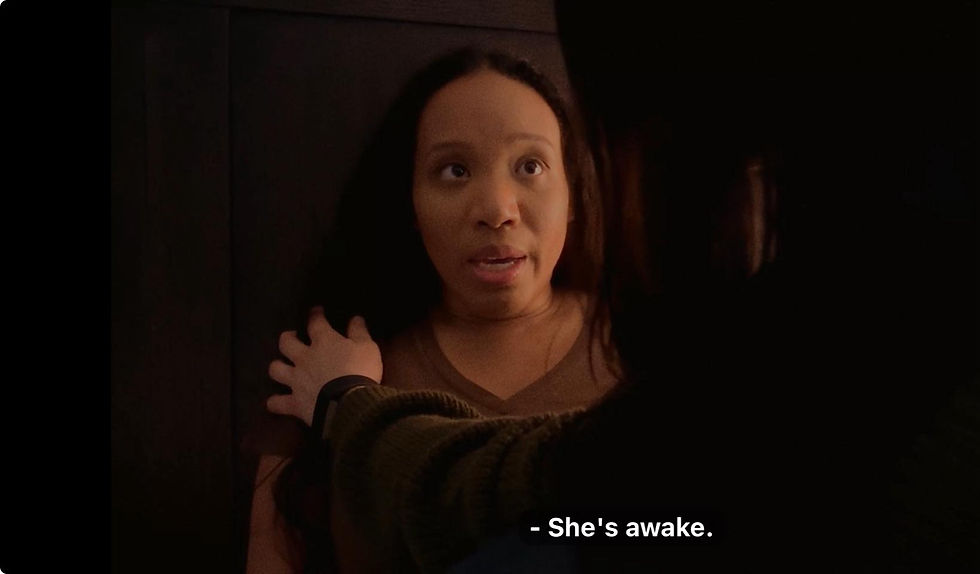
ERIC: Yes! You’re the first person to ask me that. It was seeing my wife, Rhoda, who plays both Sabina and the demon Phentara, going through childbirth twice. I realized there was a primordial rage in her, and a protectiveness toward her children, that existed well beyond her foundational personality, which is calm and nice. So the idea of this demon who wants to be with her child seemed emotionally involving to me. In a way, Phentara is a sympathetic character; she wants to be with her baby and is willing to kill to get there. Jimmy White had hatched the initial story line but I was able to bring Phentara’s motives in from my own life.
Melissa: What would you say was the hardest scene to shoot and for what reason?
ERIC: The scene when Phentara first starts speaking drove me crazy. Me and Rhoda worked on so many different voices and approaches. I was annoying the hell out of her; I wanted her to hit a completely unsettling register. Then when it was time to shoot it, she was doing her job perfectly, but I didn’t know where to put the camera to honor the note she was hitting. So I tried like six different places before I was happy.
Melissa: The movie is rich in its dialogue, with lots to choose from for deep thinking.
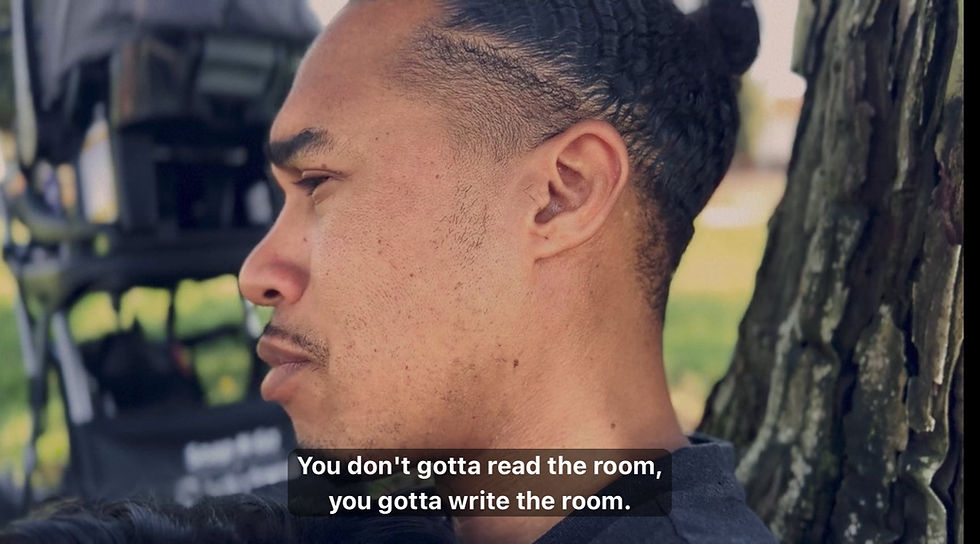
My favorite is “You don’t have to read the room, you write the room.” Where did that come from?
ERIC: That was James! He wanted Kelly, the hypnotherapist, to call her boyfriend and say, “I can’t read the room,” and for him to say, “Don’t read the room. Write the room.” I paraphrased it a bit for another scene and got Jimmy’s blessing to do so. That’s why I love working with him; nothing’s set in stone; everything is clay.
Melissa: We know how great everyone is in front of the camera, so tell me about those behind it. Music, wardrobe, etc., who are your go-to people that help make the magic happen?
ERIC: It was the most skeletal crew imaginable, and I was doing virtually everything except for makeup. But in post-production, Shannon Callahan was invaluable on the score and sound design. I made her crazy, too; I kept pushing for quieter cuts and backgrounds. You could lose your mind just focusing on that part of it. But she brought this exquisite environment to the film; it’s like a zonked, pristine trauma state. The movie sounds like it’s sealed in ice, and that makes it feel more tense. Pete Lynch was also worth his weight in gold on the color; he brought that feeling that it was a Horror movie from the 1970s, which had been my goal from Day One. And he rescued a few shots that looked terrible at first.

Melissa: You play Dr Kleinbaum in this film. Do you enjoy having a part in your work?
ERIC: Yes, definitely. Acting was my first love, before directing or screenwriting. A lot of my values as a filmmaker and writer stem from what I learned studying acting back in college and high school: being spontaneous, staying open, finding the emotion in the moment, and doing before thinking. Actors who direct, like Clint Eastwood and Woody Allen, usually get a looseness in their films because of the acting background.
Melissa: At its end intrusive leaves room for more. Will you continue with another, or leave it to the viewers' imagination?
ERIC: Good call; we left so much unanswered. The picture kind of fills out, but kind of doesn’t. When I was finishing the edit, I realized it’s essentially an origin story. It’s like the first section of a novel. So Jimmy and I planned another one, and Insurgence, the distributor, greenlit it for production. We have another movie called The Plumber that Jimmy came up with in production, then we’ll see where Insurgence is with Intrusive 2.
Horrorbuku answers below 👇
HorrorBuku
Melissa: Now this is my favorite! A lot to unpack with this one, but no spoilers, so I’ll tiptoe through so we don’t step on the flowers.
The main character is played by you. Quite challenging, I’d say, as he seems to be tortured by an unseen force, heavily medicating and mediating until the object of his manifestation arises.
How did you prepare for this role, given that you are also its director?
ERIC: It helped that I’m already crazy.(laughs) But what was interesting was when I’ve acted for other directors, I find the character from the inside-out; like I’ll try to find the temperament or atmosphere of the character inside myself then act accordingly. But since I was directing, I started building this guy from the outside in. There’s this awful beige shirt he wears that helped me find him; he’s sort of a sunken, sad sack. His best days are behind him. So I didn't want to hide my thinning hair or my big belly. These elements helped me highlight a sense of vulnerability and sadness. It became difficult to play him because even though we’re both writers, he’s less comfortable in his own skin. So I was shaking my head, thinking people would presume I was playing myself. But he’s like my self-absorbed, overthinking brother.
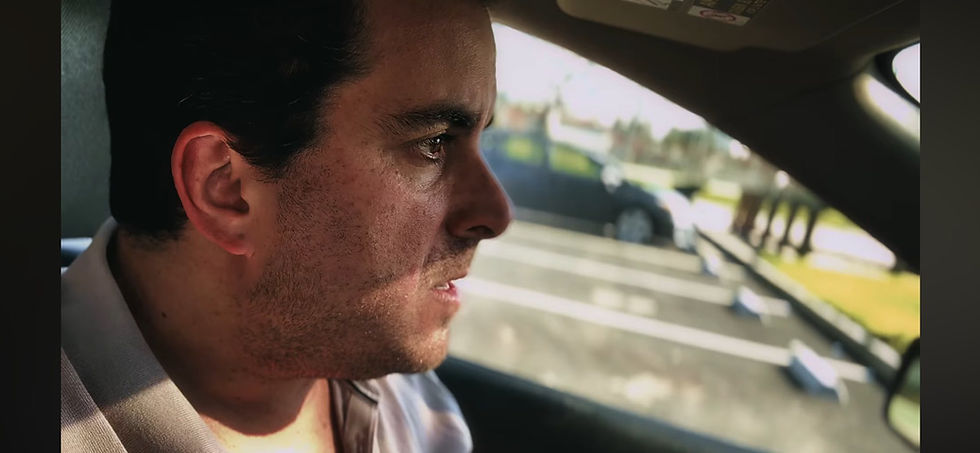
Melissa: I think anyone who is a creator can absolutely relate to this movie. Some of my favorite scenes are the MC with the therapist. It was very real to watch their conversations unfold. Especially when he told her about the Fever Tree. Was any of that plucked from personal experiences?
ERIC: I’m so glad you liked those, as they were the toughest scenes to shoot. GiGi Tasse, who plays Naomi the therapist, came in so prepared. I’ve been in therapy so I knew the terrain, but there was so much story info to get across in those scenes that the goal was to stay as grounded and unadorned as possible. Information isn’t drama, but you can slip it through if you keep things natural enough. And GiGi made it easy to get through.
Sometimes I feel like…like I’m living inside one of my books. You know, without all the death and violence.
Melissa: Not long after that piece is said, your character tries to reassure himself that he’s not schizophrenic. There are multiple moments that would prove otherwise, but is that the whole point?

ERIC: You nailed it. That’s the whole point. I’d been watching David Lynch movies and realizing that his protagonists are usually at least somewhat sane. That allows him to make the worlds around them warped, since you have a stable point-of-view at the center who’s also reacting to the oddness. If the protagonists were insane, too, there’d be no contrast; everybody would just be opaque and alienating. So I wanted to make sure my character didn’t drift too far from the shore of consensus reality. I improvised the schizophrenia line as a signal, so the audience knows the storyteller’s in on the joke. Otherwise, there’s no way in. And more to your question, yes, we’re on the borderline between reality and unreality in the film. The movie is schizoid and in a way that never relaxes or resolves, like a dream you’re trying to wake up from.
Melissa: Your MC’s banter with his own alter ego is chef’s kiss. I laughed, and I also nodded in understanding, as a lot made sense.
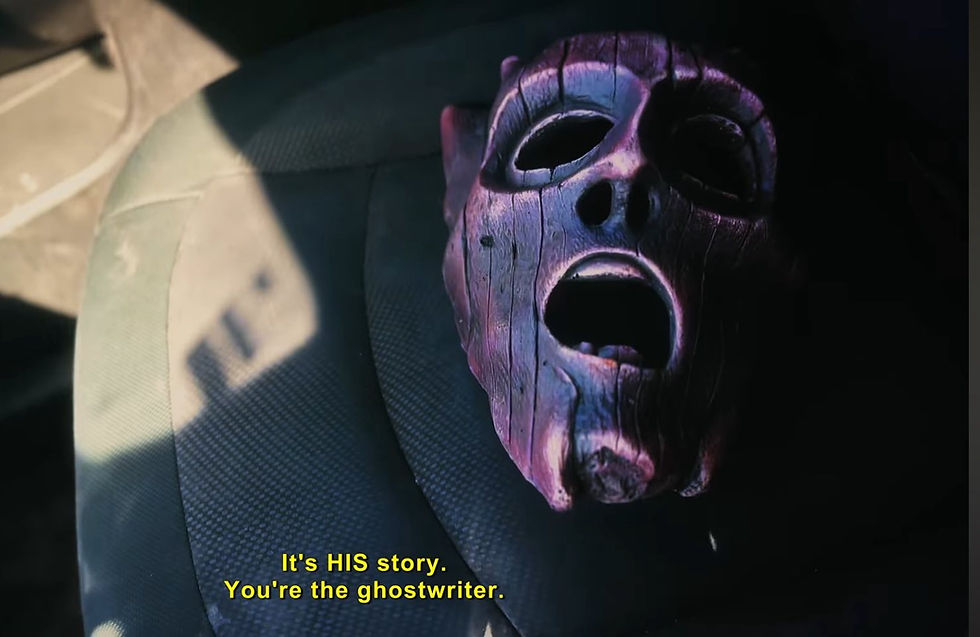
ERIC: Thank you! Those were just like the therapy scenes, only I was playing off empty air instead of another actor, and praying it would all cut together. A few other people have told me they love those scenes. Like with the therapy stuff, I was trying to give it zero seasoning so it all played organically. The memorization alone could give you a nervous breakdown. I couldn’t think about it all too much or I’d get snagged on how ridiculous it was.
Melissa: The beauty of this movie is there is something in every scene that makes you think. Even for those who aren’t in a creative mindset. It makes you feel…like something is pulling you that way. It gives inspiration. Would you agree?
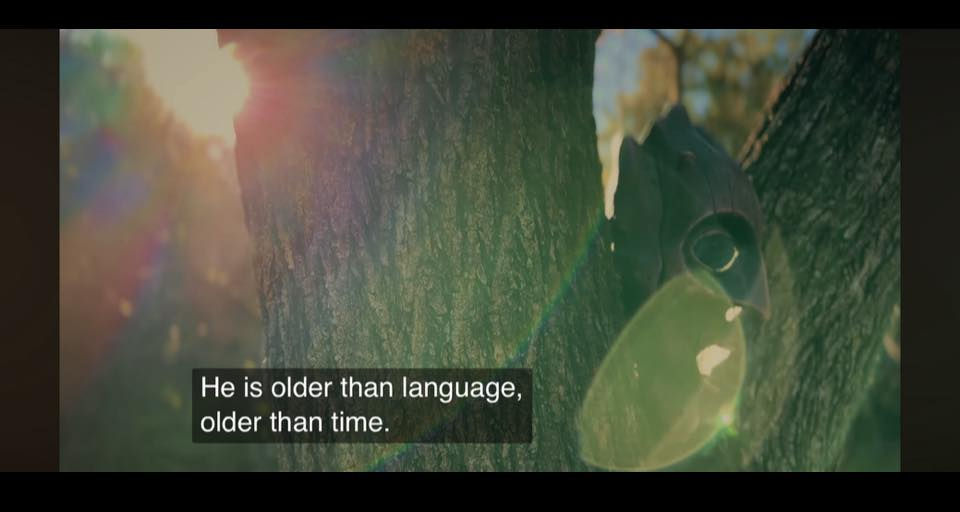
ERIC: That’s exactly my experience watching it, but I didn’t live it fully till Shannon Callahan at Planet Mischief had completed the score and sound mix. We were talking afterward about how much we loved watching and hearing the movie; all the symbolism and color and movement and subtext has an igniting, live-wire quality to it. And my co-director, Tony Arjuna in Malaysia, was a giant part of that. My section is like a neurotic arthouse film, but Tony’s is like a wicked classical fairy tale. Me, Shannon, and Tony basically immersed ourselves in a dream state and came back with the result. It feels to me like a movie that doesn’t begin or end; it’s just a flow state of creativity. And I wanted the writer’s rituals to have their importance signaled onscreen; we don’t just see him sitting there typing; we smash to close-ups of his fingers hitting the keys. It tells the audience his art is a rhythm and a ritual, and that it’s important to him.

Melissa: Overall the entire film is 5 stars to me. But we all know, as creators, we have our favorites. Which scene are you most proud of?
ERIC: Thank you! I’m happy it works so well for you. There’s an extended cutaway from the therapy scenes to my character remembering his home life. I’m really proud of that section because of how it weaves backwards and forwards in time to keep up with the emotional flow, yet still makes a kind of chronological sense. Also, everything in there is improvised so it all feels spontaneous to me. The music is on fire throughout. And the key to the character’s insecurities is all contained in that section.
Melissa: Behind the scenes are some of the most interesting to me. Tell me about your crew. Music, sound design, and all those who make it happen behind the lens.
ERIC: I was like Vincent Gallo on THE BROWN BUNNY; I was the whole crew in the American section. Tony had a proper crew around him for the Malaysian section like a normal director, but I was on my end juggling a million plates. But my core partner in the creation was Shannon Callahan from Planet Mischief. She and her partner Jaime Morales produced the movie with the plan of scoring and sound-designing it. And I had like 40 tracks they created at hand while editing it, so I was editing to the music. Then later Shannon came back in and rearranged and rewrote a lot of it. But that Planet Mischief sound was the source I drew on. It’s the movie’s temperament, metabolism, and psychic atmosphere. I don’t think the film would have as much of an impact without it.
Melissa: What do you do to prepare before a film or write a script? Any rituals to get the creativity to flow?
ERIC: I’m a big believer that you start writing and then the muse appears. It’s never easy to sit down and start, even if you’ve done it thousands of times before. So I just try to keep the door open for my thoughts and feelings to flow. I try not to think while I’m writing; that’s what editing is for. Writing is about being present and open; it feels like a live performance to me. But you have to sneak up on yourself and just begin. Then the muse shows up.
New Projects
Melissa: You wrote the screenplay for Macho Man, Randy Savage, an upcoming film produced by Kenan Thompson. I’m so excited for you and its release! Are you a fan of wrestling?
ERIC: Thank you! I’m a huge fan of wrestling, particularly from the 1980s. I actually still watch it to calm down at the end of the day and fall asleep. There’s something electric and disturbing about that era that I don’t think ever happened again. They were discovering the nature of the business and how big it could become in real time.
Melissa: What can you tell us about the film?
ERIC: I can talk about the incredible help I got from Randy Savage’s brother Lanny Poffo while writing the script. He was a mensch and a gentleman. And a hilarious guy. He passed away three years ago, and I always miss him. He let me into his world and his memories and was very open and trusting. I’ll forever be grateful.

Melissa: Did you have to do any research for it?
ERIC: I did tons of research, and it still hasn’t stopped. I’m still learning a lot about the Macho Man. Articles, YouTube videos, anecdotes other fans tell me. But the main source of material was getting to know Lanny as a person. Just his subtle behaviors, like how fast he signed a contract or how far he’d go to make me laugh. It gave me an ambient sense of what the whole family was like. They were professionals yet they also knew how to have fun and put on an excellent show. I remember Lanny once told me he was afraid of Randy. That was key. They were close, and could talk, but Randy was intimidating. So the closer I got to Lanny, the easier it was to speculate as to who or what could actually intimidate him. That helped me to shape Randy inside my head.
Melissa: How has the production process been so far?
ERIC: The team at Artists for Artists is one of the warmest, most impassioned groups I’ve worked with in Hollywood. Last I heard, they were looking at locations and talking to directors.
Melissa: Will you have a role in the film?
ERIC: Not me, but I think when people find out who they’re talking to for the lead role, the internet will go berserk. The whole casting strategy is off-the-charts exciting and inspired.
Melissa: What other projects do you have coming up?
Melissa: I’m shooting an indie Horror movie called THE PLUMBER with my writing partner James White. I act in that one. It’s really gonzo, intense, and funny. I think Lanny and Randy would have liked it.
ERIC: Thank you so much for this opportunity to talk with you! I’m absolutely looking forward to the new movie! Thank you for the interview!
Please leave a comment, and be sure to check out my stories on the website.
This interview will be updated when the link for HorrorBuku is available.

(This interview will be updated when links to HorrorBuku is released.)


Wonderful interview Melissa, I enjoyed this very much!
Love it!